It is hard to imagine a better birthday than the one I experienced this year as I turned 62. I have amazing memories of growing up in Minnesota, and most of the scenes I cherish, center around the beauty and power of mother nature.
I can easily trace my appreciation of nature to my dad; he never missed an opportunity while hiking or fishing to point things out that he observed. And even if he couldn’t always explain the science, I sensed his joy of being in the moment with whatever phenomenon was taking place around him.
Today, I am married to my best friend, who understands me because of life events I have shared with her from my past.
This year, my wife, Pam, surprised me with a planned week-long trip into my past. She wanted to see the places I talk about, where I experienced inspiration, awe, and beauty in my youth. Her thoughtfulness in planning the trip touched my heart and reminded me about the power of encouragement within relationships.
Flying into Duluth, I was delighted to see plenty of snow-cover. And after picking up our rental, and driving north up the shore toward Grand Marais, the snow continued to gain depth. It occurred to me then that I had never visited the North Shore in the winter, and the snow, birch and evergreens set against the shimmering blue waters provided striking scenery along highway 61.
Lake Superior has always been magical to me, its size, mystery, and ruggedness beyond my ability to describe adequately with words. Pam, never having visited any of the Great Lakes, was astonished by Superiors’ size and ever-changing moods. The second night in Grand Marais, I woke early to large snowflakes filling the air with the picturesque harbor and Coast Guard station as the backdrop.
After two days on the shore, we drove west to Detroit Lakes and explored the area of my childhood vacations. Each summer, our family rented a small cabin for two weeks of fishing and outdoor fun.
From Detroit Lakes, we made our way down to the Twin Cities of Minneapolis, St. Paul, where I grew up. There, we stayed in an Airbnb just a few blocks from my family home near Lake Harriet. On March 5, my actual birthday, we met up with some of my brothers and sisters who still live in the area for a celebration dinner.
The trip was a whirlwind tour where we drove over 1000 miles crisscrossing the state. Pam, a perfect traveling companion, enthusiastically listened to my stories of the places we visited, arranged a look inside my childhood home, toured old mansions, organized my birthday dinner, and provided expert navigation throughout our travels.
I feel fortunate to have made the trip before the Pandemic took hold. I love the people of the Midwest, their eternal optimism that spring might come early, or that the past winter wasn’t that bad. And as Pam said on several occasions during our adventure, “these are your people.”
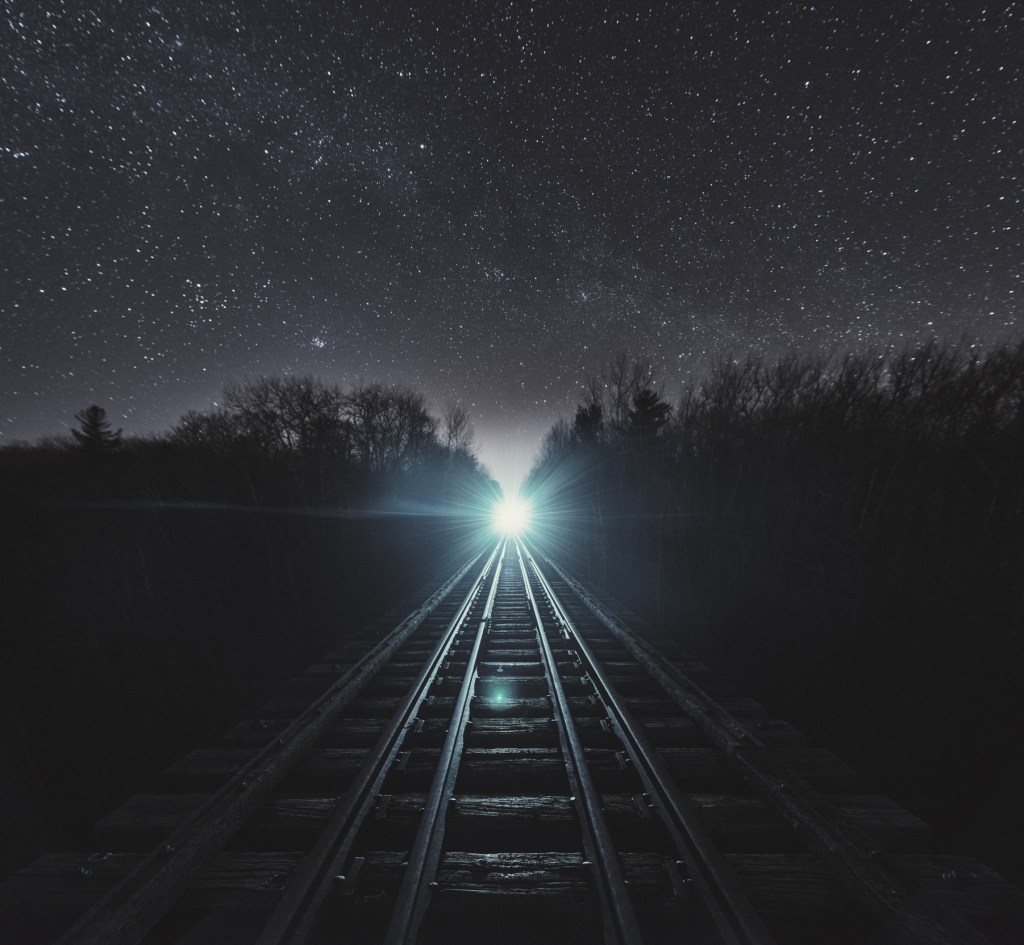
There is something about the sound of a train whistle at night that fuels my imagination. Even today, when I am up early and hear a passenger train moving past my home in Camden, SC. I wonder about the people on-board and where they might be going. I remember as a kid, walking along tracks in Minnesota, and trying to imagine where they ended.
The train’s, the Silver Star and Silver Meteor that runs from NY to Miami conjures up images of stream-line trains moving through the night against the backdrop of millions of stars emitting a silvery light.
Despite my fascination with trains, I didn’t take my first official trip on the rails until later in life. I remember standing on the platform at 3:00 AM at Columbia Station, waiting for the train that would take me to Tampa, Florida. The platform, a hundred feet or so long, had a pitched roof supported by metal poles and lamps spaced every dozen feet illuminating small pools of light along its length.
When the train arrived, it rolled in quietly, the only sound from its metal wheels emitting a scraping sound against the rails. The city, asleep, with its darkened neighborhoods and shuttered businesses, never noticed its arrival or departure.
Once settled in my seat, sleep was the furthest thing from my mind; I wanted to see Columbia from this new perspective, and was frustrated by the darkness of a moonless night. I was only able to guess at the general area in which we traveled, and it was two long hours before dawn unveiled the passing countryside.
Leaving my seat to find the dining car, I passed sleeping passengers along the way. In the space between cars, you get a better sense of movement as the small walkways mimic fluctuations in the rails, and without insulated walls, the sound of rushing air unmuted.
The dining car, empty of passengers when I arrived, consisted of a small counter where a railroad employee busied himself with stocking the shelves. Purchasing a sweet roll and coffee, I sat in the deserted car watching an orange-red sunrise, its fiery coloration promising steamy temperatures for the day.
It was interesting to see small towns along the route. It would seem efforts to make a first impression focused mainly on car travel—the train route, offering a different view, where the sins of too much stuff were piled unceremoniously behind businesses. The dumping of trash along the tracks near towns contributed to a feeling of decline.
When stopping to pick up new passengers, smokers stepped down from their cars and huddled near the tracks feeding their addiction.
Arriving in Tampa, the engineer performed a lengthy backing maneuver into the station. The Tampa Station house beautifully restored fit perfectly into the old cigar district of Ybor City.
My daughter, her husband, and grandson who picked me up, questioned the sanity of spending an additional three hours traveling by rail as opposed to driving, and as I left the station, glancing down the tracks I had yet to travel, I couldn’t help wondering where they might go.
Last week as the Pandemic unfolded around me, I started to see the world in a different light; it had become treacherous and full of unknowns, creating a murky darkness. Unable to think clearly, information overwhelmed my senses, and I could no longer rely on my usual process of decision making and logical reasoning. Proactively stepping back from the fray and consciously limiting my consumption of reporting, I was able to reestablish an ability to think, create, and see the miracles of God’s creation taking place every day.
Several days ago, Teddy, a baby boy who is my grandson, came into the world. The hospital forced to follow guidelines had to limit visitors severely. Despite the lockdown, his beautiful tiny features, his pure innocence, and his promise of renewal brilliantly shone through in images from the hospital room. At that moment, fear of an uncertain future came to a standstill with the remarkable miracle of his birth.
Having been given this window of calm and normalcy, I began to notice other everyday miracles being drowned out by constant noise. Spring had quietly arrived and splashed her vibrant colors in every direction. And as I walked out my driveway to the fanfare of snowball hydrangea, I marveled at the season’s efficiency in transforming our world, oblivious of its on-going troubles.
Strolling down my favorite dirt road through a small patch of woods, signs of renewal were evident at every turn. There were hundreds of plants, bushes, and trees in bloom, with insects frequenting them filling the air. And even though the activity is frenetic, there is a purpose within the dance. And it occurred to me that the Pandemic needed a similar unity of purpose. The virus, unbiased by social status, race, religion, or, stereotypes will meet its match in the resolve and human spirit of the citizens of our nation and the world.
It must have looked like some strange ritual to our neighbors as my dad, me, and a couple of my brothers stood in a semi-circle on the side of our house in sub-zero temperatures. It was late November in Minnesota, and in those days, during the mid-60s, the ground would already be frozen. My dad, holding a rolled-up section of the Star & Tribune newspaper, had lit one end on fire, and was now holding the flames underneath the water spigot sticking out the side of our house. The smell of the burning paper and the hissing and sputtering of the spigot before water flowed freely, signaled it was time to prepare our backyard ice rink for the upcoming winter season.
Growing up in the north, I never thought it strange that as winter approached, we flooded our backyard to create an ice rink. Now, as an adult living in the south, it seems like a foreign concept when explaining the process to someone.
Our yard nearly perfect for the endeavor had a flat dirt surface measuring approximately 50 feet by 20 feet. The dirt lot, located at the very back part of our yard was a six-foot drop in elevation from the upper yard wherein the summer grass grew thick and green. As long as I can remember, I never saw grass grow on the dirt area, though. The hill from the upper yard formed a natural barrier for the near side of the rink, and on the right side, a retaining wall created another barrier for containing water on that side. The far end of the yard had a fence, and beyond the fence, there was a straight drop of three to four feet into the back neighbor’s yard. The left side was also fenced, with a more severe drop of over 10 feet. The two fenced areas had a slight incline of elevation to meet the top of the two retaining walls and completed the bowl effect that held the water inside the yard until it froze.
Creating the rink isn’t as simple as letting water flow from a garden hose to flood the space. The creation of a useable skating surface took multiple floodings to build up the ice in thin layers, cover any high spots, and create useable ice for the entire space. Subsequent resurfacing during the season smoothed the ice from the cuts caused by the skate blades, much the same as a Zamboni machine does for professional hockey teams. By the end of the season, it was not unusual to have ice four to six inches thick.
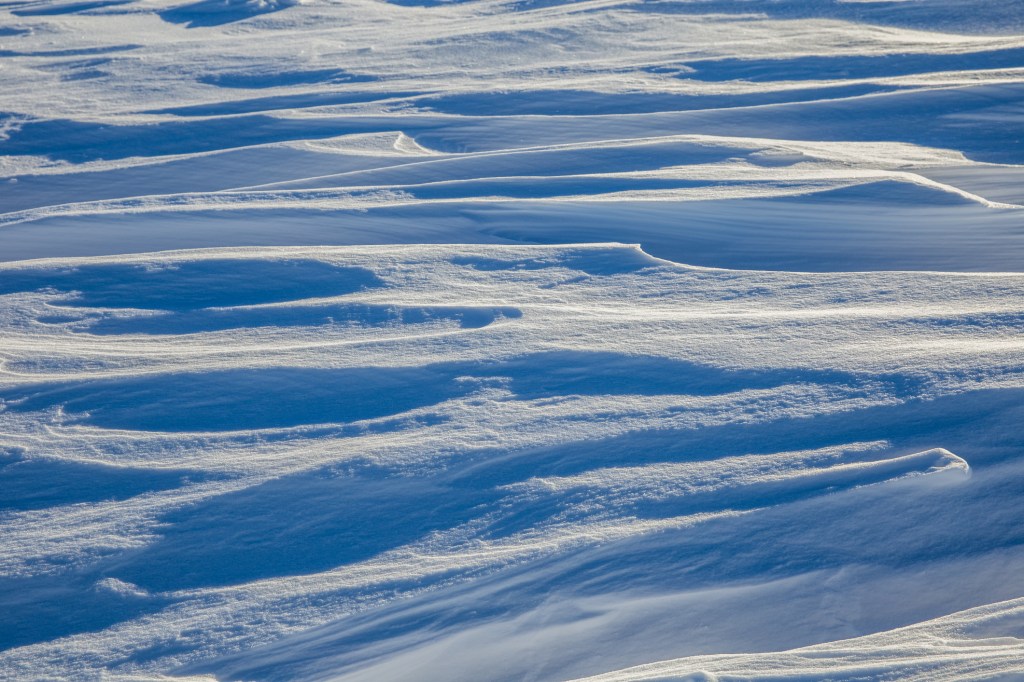
The rink was a magical place at night when skating under the stars, or In the daytime, with the blinding brightness of the sun reflecting off the snow. Each time there was a new snowfall, the ice needed clearing, and often the wide aluminum shovels were pushed across the ice while we were wearing skates. Sometimes it would snow while skating, and the swirling flakes added another level of beauty to the wintery scene. On especially snowy winters, the snow piled up from clearing the ice could reach a height of six feet or more. The large amount of snow provided an additional opportunity to build snow caves along the embankment.
There was no lack of places for a skating enthusiast to go in those days. In Minneapolis, nearly every city park built a hockey rink and flooded larger areas for recreational skaters. The chain of lakes within the city would also get in on the action by putting up warming houses on the rinks they created when shoveling off a portion of the lake ice. It is an exhilarating experience skating on lake ice with the open expanses and the natural beauty of your surroundings.
It was always sad to see the ice breaking up at the end of the season, as the warm March winds signaled spring. Usually, our backyard rink would get a layer of water on top of the ice, rendering the rink unusable. Soon after, cracks formed, and the large thick sheet would start to break apart. Once it broke apart, melted water became trapped beneath the ice sheet. I remember one year during this time where I was able to stand on a large sheet of ice and with a broken hockey stick pushing into the ground, moved the ice across the yard like an ice raft.
As the water finally drains from the former ice rink, the old dirt lot reappears with a sticky surface of mud. Soon after, the heat of summer turns the dirt lot back into a barren area, holding no resemblance to the winter wonderland; it is transformed into each winter as the cold winds of November began to blow.
I have hiked hundreds of trails in the last forty years from the North Shore of Minnesota to Pisgah Forest in North Carolina, to the Palmetto Trail in South Carolina. But recently, I hiked a trail that is my all-time favorite. It is almost as if Mother Nature took all the best bits of every other trail and designed a hike to incorporate each piece.
The Mount Rogers trail starting from Grayson Highlands State Park has a diversity of terrain that I have never before witnessed on a single hike. The first thing you notice from the beginning is the breathtaking panoramic views of the Blue Ridge Mountains surrounding you. Your starting elevation from the trailhead in the park is 3,698 feet, and your view continues throughout the hike until, ironically, the last leg which takes you to the summit and has no view at all.
Starting from the parking area and traveling through windswept grasses, the trail invites you up a gentle slope and through a wooden gate to where you’re likely to encounter the first of many wild ponies grazing on plentiful grasses. The ponies lavished with attention from every type of hiker are almost comical in their nonchalant response to the attention.
The trail meanders through grassy balds, and alongside blooming rhododendrons, if it happens to be June, travels through heavenly scented pine forests and across rock outcroppings that wind around cliffs reminiscent of scenes from Butch Cassidy & the Sundance Kid. There were fields of wild berries covering acres of hillside, and in every direction, mountain peaks stretch to the horizon with a blue hue mimicking the choppy waves on an ocean.
The deep blue sky dotted with cumulus clouds its grandness emphasized by the wide-open spaces of the balds, and the elevation achieved en-route to Mount Roger.
The final leg toward the summit holds another change consisting of rich greens, mossy growths on fallen trees, and a forest floor alive with plants and life that one would expect to see in a more tropical environment. The forest canopy is dense and closed-in and sunlight that penetrates slants in with rays that might highlight a small evergreen or a patch of the forest floor. The place has an almost sacred feel in its tranquil silence.
Once you reach the summit, a marker rewards your effort, and reads “US Coast & Geodetic Survey Reference” with a date of 1930, 1933, scratched into its surface. The marker indicates that you are now standing at the highest point in Virginia at 5729 feet. The large boulder where the marker is affixed provides a perfect place to sit, brew a cup of tea and take a respite to consider the beauty and grandeur of this special place.
John Dowd was relieved to be back near his new hometown before the threatening skies opened up with what promised to be a heavy downpour. The railroad crossing in the distance was only a mile from the edge of Clarkston Lake, a town with a population of a little less than 5000 souls. About a month ago, he accepted a position as an administrator at a small community college. The college served several towns in approximately a 30-mile radius, and he had made the difficult decision to move after his wife lost her battle with cancer earlier in the year. Ridgeview, located in the northern part of the state, was approximately 180 miles of farmland from Clarkston Lake. Ridgeview, where he had lived with his wife, was an industrial town of nearly 100,000. The city after her death looked tired and worn out, and John felt the need for a fresh start where he could escape the desperation of his loneliness.
It was nearly 6:30 PM, and the black clouds and drenching rain snuffed out the little daylight remaining. The rain started falling in earnest, and visibility dropped dramatically to less than 20 feet. The car’s headlights were trying to penetrate the streaming rain and reflected into his eyes like driving into a mirror. John slowed to a crawl, staring ahead for any sign of the railroad crossing signals. Finally, seeing one materialize on his right, he stopped before the tracks, not entirely trusting the signals; he listened for any sign of a train. The incessant pounding of the rain on the car’s metal roof drowned out all other sounds.
Just as he was about to let off on the brake and cross the tracks, a reflection of something metal on his right caught his attention. Looking closer, he saw a young woman standing next to a bicycle. The girl was facing him from the other side of the tracks. John crossed the tracks and, pulling his car even with the girl, opened the passenger window and asked, “Would you like a ride?” shouting the words over the din of the rain. The girl peering through the opening said, “if it is not too much trouble.”
“No trouble at all,” John said and reached across the seat to open the door. John pressed the passenger-side window control to close the window. The girl wheeled her bike to the pole that supported the crossing lights, leaning it there, returned, and got into the car.
John noticed her clothes were different from what young women in the town typically wore, and the heavy-looking material looked soaked through and through.
“I am ever so grateful you happened along; the rain caught me quite off guard.”
“I almost didn’t see you standing there; the reflection from your handlebars caught my attention. Is there somewhere I can take you?”
“I was on my way to visit my Aunt, and if you were so kind as to take me, I would be forever thankful.”
John thought it strange the formal way she talked; it certainly was not how most young people spoke today.
“My Aunts home is on Narrow Creek Road; it is a small farmstead about a mile back in the direction in which you came.”
“What about your bicycle?”
“My Aunt can take the carriage in the morning into town, and I will pick it up on the way.”
Carriage? John wondered; he had heard some people who shunned modern conveniences and lived spartan existences but had never seen any horse-drawn carriages since moving to Clarkston Lake.
John carefully turned the car around, crossed back over the tracks, and headed away from town in the driving rain.
“What’s your name?”
“Dorthy Roth, I live in the large boarding house near the Lake.”
John was surprised to hear about a boarding house near the lake; the town had done a lot of development by adding green space, walking trails, and biking trails. He was under the impression that anywhere near the water was a high-rent district.
Seeing some farmhouse lights on the right, Dorthy said, “It is not much further; Narrow Creek Road is just on the other side of that wooden bridge.”
John did not remember crossing a wooden bridge, but he did remember seeing one of those signs about “Bridge surfaces freezing before the road.” Dorthy, sitting up, said, “it is the next road to the right.”
John had not noticed the dirt road before but could see now it traveled alongside the small creek flowing fast and near the top of its banks from the downpour. After a short distance, they rounded a bend, and a small farmhouse appeared on the left side of the road. The home had a white picket fence and several lights inside, giving it a cozy look on a stormy night.
Dorthy turning toward him smiled brightly and said, “I won’t soon forget your kindness and generosity.” Getting out of the car, she opened the fence gate and, crossing the yard, went inside the house. Turning the car around, John felt tired and was looking forward to returning to his small rental home.
The next day in his office, his assistant Betty came in with a steaming cup of coffee and set it on his desk.
“You look tired.”
“Thank you; I look forward to not having to make the trip to Ridgeville so often.”
“How was it.”
“I am feeling less and less like Ridgeview is my home and look forward to coming back here.”
“Good, I think that is progress.”
“Hmm,” John said with a contemplative expression.
Betty turning, was about to leave when John remembered the girl.
“There was one thing weird about the trip back.”
“Oh?”
“Last night, just as I was coming into town, the clouds opened up, and I could barely see the road. I stopped at the crossing and saw her standing next to her bicycle in the rain.”
Betty, 57 years old, had lived her whole life in Clarkston Lake and knew a lot about the history of the place. Looking at John, she had a strange expression on her face.
“Was the bike red?”
“It could have been red; I am not sure; it was dark; why do you ask?”
“She is not real,” Betty said with a seriousness that sent a chill through John.
“What do you mean not real?”
“There was a young woman who rode a red bicycle killed at that crossing in 1910. Since then, people have reported seeing her standing beside her bike near the tracks, usually when it’s raining. It was raining the night she was hit by the train.”
“Wait a minute; I don’t think you understand; I gave her a ride in my car, drove to her aunt’s house, and watched her go inside.”
“Did her Aunt live on Narrow Creek Drive?”
“How the hell did you know that.”
“Grab your keys; I need to show you something.”
Fifteen minutes later, John, standing outside his car, visibly trembled as he looked at the complete wreck of a home in front of him. He had driven up and down the road trying to find the well-kept, inviting home he had seen last night, but he knew in his gut that the pile of boards, caved-in roof, and underbrush in front of him was where he had dropped the girl off.
“He was mostly silent on the way back to the office, trying to wrap his mind around what he had experienced. Replaying the scene, he had to admit there was a strangeness about the young woman.
Betty checked in on him a couple more times during the day, and when it was time to leave, she asked if he would be alright?
“Yes, I will be fine. I am just still shocked at how real everything was.” He was thinking about his wife and how he wished he could see her again.”
“Alright, I am leaving; I think you should go home too, try to get some rest.”
“Ok, mother,” John said in a good nature jest.
Betty smiling, left the office.
John had not quite figured out a routine for buying and preparing meals at his home, so he usually ended up at his favorite pub downtown that had a view of the lake. Sitting at the bar, all the fancy bottles with their magical potions lit from below reflected softly in a mirror, giving them an almost irresistible charm. Spotting his go-to Bourbon, Makers Mark, he had the bartender pour him a shot and bring him another Guinness as a chaser. He wasn’t hungry tonight, but the pints of Guinness tasted extra smooth, and before long, he had finished off four of them.
A short time later, noticeably impaired, he believed he was ok to drive the mile and half of the mostly residential streets to his home. Pulling out of the parking lot, he changed his mind and headed for the highway that would take him north out of town. Making it to the railroad crossing, he stopped at the tracks and opened the windows, hoping the cool air would keep him awake. He could not remember when he had been this tired, and his eyelids kept shutting no matter what he did.
The last thing he remembered was a blinding light coming at him at such a rate of speed that he felt like it was going to swallow him whole. When he woke up, he was face down in the leaves and could smell the rich, dampness of the earth beneath him. Standing up, he found himself in the woods with a dense knee-high fog clinging to the ground. The fog was so thick it made the trees look like they were stuck into it like birthday candles on a cake. He could hear water running in the distance, and walking in the direction of the sound, he found a creek bed. He couldn’t see the water because the fog was denser in the creek’s shallow valley. Walking along the embankment, he found the small farmhouse he was looking for—a tidy home with a white picket fence and warm, welcoming lights that invited him in.
I had heard a lot about Marley before ever meeting him. I was in a long-distance relationship, and my girlfriend would regale me with stories of the fantastic adventures Marley and his likely reluctant co-conspirator, Koda, would go on after escaping from a perfectly good backyard. Marley, a large loveable Golden Retriever, and Koda, a black Lab mix, lived in a nice home in a Charlotte suburb.
Like most Golden’s, Marley did not believe there was such a thing as being to close to his humans and would stand on his hind lakes and wrap you in a hug that looked like you were going to take a spin on the dance floor. Or, if you were sitting, he would try to become a 100-pound lap dog. Marley had a crooked nose, and when he looked at me, I was reminded of one of those characters in the movies who played a hustler or bookie, with a Fedora hat, chewing on an unlit cigar.
I came into the relationship with the suspicion that he was intelligent from everything he had been able to accomplish during his bouts of unrestrained freedom after escaping. On a couple of occasions, he had covered multiple miles and would have navigated some busy thoroughfares. In addition to looking out for himself, he had Koda to look out for as well.
I did not realize it when we first met, but soon I would be locked into a battle of wits and wills with this formidable opponent. As a man trying to impress his girlfriend, I may have mentioned a certain familiarity with tools and a rudimentary knowledge of building and fixing things. My girlfriend was smart; she didn’t ask me to fix anything but made a point of telling me what was wrong. When I didn’t take the bait, she then said, “can you think of anything we could do to keep Marley from escaping?” Having never owned a dog, I was unfamiliar with the energy and tenacity dogs exhibit when feeling constrained inside a lush shady backyard.
The challenge, now verbalized, put me into a no-win situation. The gauntlet had been thrown down, and I would have to take on this slippery escape artist. I was familiar with Escape from Alcatraz and knew Marley, like Clint Eastwood, had plenty of time each day for planning, so I would need to be one step ahead.
When assessing the yard for the first time, it was painfully obvious where the weakness lie and the cure, as simple as a couple of cement cinder blocks. Once I had the blocks in place, I assured my girlfriend of the futility of any future attempts by the pair to escape. She didn’t look as confident, but took a wait and see approach.
I had overlooked the possibility of other dogs roaming free and taunting our jailbirds in the process. The cinder blocks proved to be no match for Marley, and the pair fashioned a workaround in a matter of days. Now a new ingredient called pride was involved and the fact that an intelligent Golden Retriever was not going to outsmart the boyfriend.
Walking into their domain and after being smothered by the two for petting attention, I walked the complete perimeter of the fence looking for the weak points. I could tell Marley was watching me, and I believe I detected a bit of smugness in his crooked nose smile. Later talking with my girlfriend, she casually mentioned she had some components for putting up an electric fence. I immediately had visions of wire stretching for miles, and instinctively knew it would involve a lot of work.
The fence definitely had merit, there was way too much perimeter to protect with obstacles. After consulting the internet on installation, I took the components my girlfriend had and purchased two large bags of insulators.
On the install, I tried to keep the wire as close to the ground as possible so that digging underneath would not be an option. Once I had the bright yellow insulators installed, and the wire stretching between them, I watched Marley walk the perimeter looking at the new fortifications. It reminded me of Jurassic Park and how the Velociraptor’s looked for weaknesses in the fence line. Koda, less interested, stayed more to the center of the yard, letting Marley do his reconnaissance.
I was worried about one section where the terrain took a sudden dip in the middle of one fence section, and that dip could provide a bit of an opening in an otherwise secure perimeter. I was not overly concerned because it would only allow access into the neighbor’s yard, which was also fenced.
The next day when my girlfriend returned from work, she found the two in the neighbor’s yard. I wouldn’t say at this point that the two were taunting me, but they were surely talking behind my back.
This time when I went into the yard, I had my bag of insulators, a roll of wire, a hammer, and my determination. Both dogs watched as I turned the breach into something more resembling a power grid. Wires wound around insulators and switched back until the final wire was only two inches from the earth. Marley acting nonchalant, waited until I finished before checking it out for himself.
Marley and Koda, were finally contained, and protected from crossing dangerous roads and getting into other mischief on far-flung adventures. The two had a knack for finding well to do homes or farms to be voluntarily captured and where the occupants treated them like prodigal sons. One time when visiting my house in West Columbia, a gate was accidentally left open, and they went on an adventure that ended with the two getting a ride home in a police cruiser. When the cruiser pulled into the driveway, the two were sitting straight up in the backseat like a couple of passengers in a police Uber enjoying the scenery and happy to be home for dinner.
Both Marley and Koda have now passed on, but their unconditional love, unique personalities, and adventurous spirit lives on in our memories.
There is something magical about a dense fog or a snowstorm for a kid. It might have to do with a desire to be invisible like a Superhero, or because the conditions are conducive to an adventurous imagination. It was that type of weather the night Dan Billings, a student at Our Holy Saints Catholic school, called his best friend and classmate Bobby Nettles. The boys lived directly across the street from each other, and if you snapped a chalk line between their homes, their front doors would be perfectly aligned. The boys both in the seventh grade had become fast friends since Dan moved into the neighborhood from somewhere in the south, where it never snowed.
Bobby loved winter, and he especially liked snowstorms like the one stirring tonight. “Do you want to see if we can get lost in the blizzard,” Dan said without saying hello when Bobby answered the phone. Bobby wasn’t sure he would characterize the current storm as a bonafide blizzard, but he could hear the high pitch strong winds make when forced into tight spaces. “Sure,” Bobby responded, “what do you have in mind?” “I was out a few minutes ago letting in “Big,” and I saw snow drifting so thick I couldn’t see your side of the street.” “Big,” a large black lab Dan’s family brought with them when they moved, sometimes made Bobby nervous by the way he looked at him.
The idea of disappearing into a storm sounded like a good cure for the boredom that often-accompanied Christmas break. The boys agreed they would meet in the street in front of their houses in 30 minutes.
It is no small matter dressing for severe weather, and there is an order to the process of layering. Long Johns comprised the first layer; wool socks pulled above the leg bottoms came next. Heavy corduroy or jean pants went over the Long Johns, and a thick button-down lumberjack type shirt tucked into the pants finished the base. Two additional garments pulled over the lumberjack shirt ensured maximum core warmth. Next came the lacing up of thick rubber boots before putting on an outer jacket that worked best if it had some waterproof properties. The jacket fastened or zipped to its maximum closure, with its collar flipped up, allowed for the wrapping of a scarf to protect the neck and chin area. A stocking cap pulled down low on the forehead, and leather choppers completed the ensemble. The choppers, thick wool gloves inserted into a leather sleeve with one cavity for the thumb and a larger cavity for the rest of the fingers. The gloves and boots were sometimes placed on top of a radiator or gas stove, giving them a head start against the cold.
Bobby, the first out of his house, looked down the street, and could see Dan had been right about the storm. The snow falling was not the usual large flakes; this snow was smaller ice crystals falling by the millions that stung his face in sudden gusts. The roar of the wind through the tall elms lining their street sounded like the rush of a waterfall. The winds started up without warning, rushing violently through the branches for several seconds before subsiding.
Bobby saw an arch of yellow light reflected on the snow when Dan opened and closed the side door of his house. A few seconds later, he saw Dan trudging from the shadows, crossing his front yard, and heading toward the street. At least, Bobby, guessed it was Dan; there was not enough of his face exposed to make a positive ID. The two boys met in the middle of the deserted street, and stood without talking for few minutes, admiring the beauty of the storm. A curtain of white began moving toward them from further up the block, quickly followed by the sound of rushing wind. They turned their backs against the blowing snow before it hit them, and for a few seconds, disappeared within the white-out. When the wind subsided, they agreed their best route was into the storm toward the large urban lake lying a few blocks from their homes.
After traveling along the residential streets, the homes ran out, leaving approximately a hundred yards of green space to the shoreline with paths for walkers, bikers, and beach-goers in warmer months. Tonight, none of those things were recognizable, or the idea that warmer weather ever occurred in the space.
The city had strung cheap wooden fences for snow barriers along the shoreline like they did every year. The barriers were supposed to keep drifting snow off the lake from ending up in the roadway. The fences were nearly covered, and snow drifting over their tops looked like thin smoke swirling in the air before being whisked away on strong wind currents. Beyond the fences, there was nothing but white; no sky, no foreground or lake ice just the falling and drifting snow creating a veil impenetrable to the human eye.
Dan and Bobby, standing on the corner of the street that ended in front of the lake, watched in amazement at the blizzard conditions occurring over the wide expanse of frozen lake. They could sense danger in their pursuit of adventure, and if they were to continue, going out onto the ice is where adventure beckoned.
They had not seen a single car, unusual for a city with over a quarter of a million people. Turning to their right, they followed Lake Drive, walking a quarter block to the entrance of the beach parking lot. It was hard to discern where driveways and parking lots began and ended; all the terrain being leveled into a contiguous plane of white.
There was a break in the snow barrier at the head of the beach allowing access to the lake. Walking down across the snow-covered sand that formed the beach, they arrived at the lakes frozen edge, and already invisible from the road. In front of them, lie only white, and choosing to enter that world of isolation and chaos, accomplished their mission of disappearing within the storm.
It was nearly 10:00 PM when the boy’s families noticed them missing, and the storm raged on throughout the night and into the early morning hours while setting new records for snowfall and wind speeds in its wake. The powerful winds pushing drifts onto the shoreline, buried the snow barriers and in some places, those drifts exceeded ten feet in height. The Lake Road, as well as most residential streets, were impassable for days.
The boys never returned from their adventure and were never seen again. There is a presumption they had foolishly tried to challenge Mother Nature’s power and lost. But I would rather believe within the fury of nature’s violence; there might lie opportunities to escape into other worlds where imagination, exploration, and adventure are still alive.
MacDill Air Force Base in Tampa, Florida, was my first tour of duty after enlisting in the military in 1976. When I arrived on the base, one of the first things I noticed was the tropical climate and how different it was from where I grew up in Minneapolis. One intriguing feature was the clocklike precision of afternoon thunderstorms. From the Flightline, you could watch the wall of rain sweep down two miles of runways and across the sea of asphalt, which made up the Flightline. The resulting humidity and steam arising from the previously scorching tarmac once the storm passed was quite oppressive. The rain itself was different from anything I experienced in Minnesota. The volume of water that fell was astounding even though the downpours were short-lived.
MacDill AFB occupies the southern tip of the Tampa Bay Penisula, and the water surrounding it consists of Tampa Bay, Old Tampa Bay, and Hillsborough Bay.
In the spring of 1980, I was working the graveyard shift. Our crew’s job was to ensure the fighter jets weapons systems were operational for the next days bombing runs to Avon Park. MacDill, a pilot training base at the time, practiced dropping all types of ordinances in a controlled setting.
I lived about a mile off-base from the main gate and traveled each night to my job by bicycle. Once I cleared the main artery for cars, I would cut over to the FlightLine and follow the service vehicle route, which skirted the edge of the tarmac. My shift started at midnight on May 8, 1980, and it was a typical night with high humidity, warm breezes, and the smell of salt air and jet fuel. As the shift started, the calendar turned, and it was now the early morning of May 9th.
The work we did that night was the same as every other night. Our four-person crew made sure that the jets scheduled to fly in the morning, were properly configured with the missiles and bombs required for the next days training mission. We normally completed our tasks by 5:30 AM and then waited for the dayshift to relieve our crew. It is unusual to get rain at night, and once the afternoon showers rolled through around 4:30 PM, the rest of the day and night tended to remain calm. The following day the heat would start to rebuild the thunderheads. During the night, we could see what the locals referred to as heat lightning. The flashes of lightning deep inside cloud formations appeared in the distance over Gulf, and seldom had any effect on our weather at the base.
At 5:43 AM on the morning of May 9 in the Gulf of Mexico, the 609 foot 34,000-ton Summit Venture, raised anchor and headed for the entrance to Tampa Bay.
At 6:30 AM, the National Weather Service in Ruskin Florida reported a line of intense thunderstorms 65 nautical miles west of Tampa Bay. The line which had developed out of a moist tropical air mass was moving at nearly 40 miles per hour toward the east.
At 7:15 AM, with my shift nearly completed, I saw the weather rapidly deteriorating around me. It was not like the approach of a normal storm with a flash of lightning followed by a rumble of thunder every few seconds. This storm had lightning resembling a laser show and a continuous rumble of thunder growing louder as it rolled maliciously toward us.
7:25 AM, the Summit Venture was starting its approach toward the Skyway Bridge that connects St Petersburg to Bradenton as part of Interstate 275. The severity of the sudden storm completely blinded the crew of the Summit Venture with winds estimated between 60 and 70 mph, and a falling rain volume equivalent to 7 inches per hour.
7:31 AM, the Summit Venture’s pilot, gets his first visual of the bridge and immediately realizes he is no longer in the shipping channel. The pilot issues a series of commands for evasive measures.
7:34 AM, the Summit Venture collides with the Skyway bridge, and 1297 feet of the roadway falls 150 feet into the water below. Eight vehicles, including a Greyhound bus, unaware of the collapse and traveling with limited visibility drive off the end of the remaining roadway. Within minutes 35 people have lost their lives in the accident.
7:42 AM, the wind from the storm on-base reaches nearly 40 mph, and the rain fell in a volume that I had never witnessed before or since. Having been caught temporarily outside in the onslaught, I found it difficult to catch my breath with the sheer amount of water pouring over me.
The storm cleared the base and moved to the east by 8:15 AM. The mighty deluge of rainfall had no place to go on a base with only a few feet of elevation. The Flightline, service roads, infields were all flooded with six or more inches of standing water. And what normally was a sea of pavement, now looked like a massive shallow lake.
Riding my bike home that morning was difficult through the standing water. It was not until I arrived that I learned of the Skyway Bridge disaster. After witnessing the storm on the base, I could easily imagine the difficulty the crew must have faced in trying to navigate the large ship through the binding storm.
Have you ever seen a clear vision of your future? I have experienced this type of vision on a couple of occasions in my lifetime, and although I cannot be certain I was being given a glimpse into the future, there was enlightenment and understanding at that moment.
The most powerful episode of this phenomenon happened for me in June of 1976. It was my senior year in high school, and the graduation ceremony for our class had just ended. The institution many of us loved to hate was, at last, pushing us out into the world, no longer interested in our attendance, our dilemmas, or complaints. It was time to close the chapter on another year of graduates; there was an endless supply of future graduates stacked up behind us.
High School had been a strange existence for me. I was present, I attended class but somehow managed to exist on the fringes, just connected enough to make it to graduation. I don’t remember much about the ceremony other than it was outside in a park a few blocks from the school. I have an eight by ten photo of me receiving my diploma. I was wearing platform shoes, the style in 76, and with my six-foot four-inch height, I appeared to dwarf the official handing out the diploma’s.
The aftermath of the ceremony was an unorganized scattering of graduates and their families. Many, including myself, traveled the few blocks back to the school and stood in small groups talking and taking pictures. It was almost as if, now that we had our freedom, we weren’t altogether sure that’s what we wanted — standing in the shadows of the same buildings we often viewed as a prison, they somehow now seemed like familiar, safe places.
It was during this time as I watched students posing with family members and other students who wandered about the campus like they did not know what to do next, that the vision came to me. There wasn’t any thunderclap or fanfare accompanying it, only a realization of its meaning that was as clear as if it had already come to fruition. It was a statement, stark and unambiguous. I have reasoned that my fringe existence could have influenced my thinking, but the visions clarity was powerful, and I remember it today, 43 years later, like it happened yesterday.
What I saw so clearly in that moment was a simple truth that I would never see any of these people again. For someone on the fringes, looking in, that was still a hard concept to grasp after spending the last four years with the majority of the graduates and the last 12 years with the ones from my previous school. Even though it was a harsh concept, because of the vigorous way in which it had come into my consciousness, I believed it 100 percent.
Everything happening around me now took on new meaning, and the scene turned into a surreal experience. The vision as it turns out, was extremely accurate, and in November of that same year, I enlisted in the US Air Force and spent the next eight years of my life working at a pilot training base in Tampa, Florida.
I have never spent much time in life looking backward, the struggle to survive, keeping me focused in a forward direction. I do have some regrets about not taking better advantage of those formative years, but there are few benefits derived from regrets and no way to change the past. What I have discovered is that life is a series of chapters and transitions, and we are ultimately in charge of our own story. Like a good book, our story has a chance to get better with each chapter we write.





 Joseph Benedict Blog